
1. The Direct Answer: Can You Really Double Blade Life?
Yes. Equipment managers who systematically apply wear-reduction strategies routinely achieve 2x to 2.5x the blade life of operators who simply “run them until they’re gone.
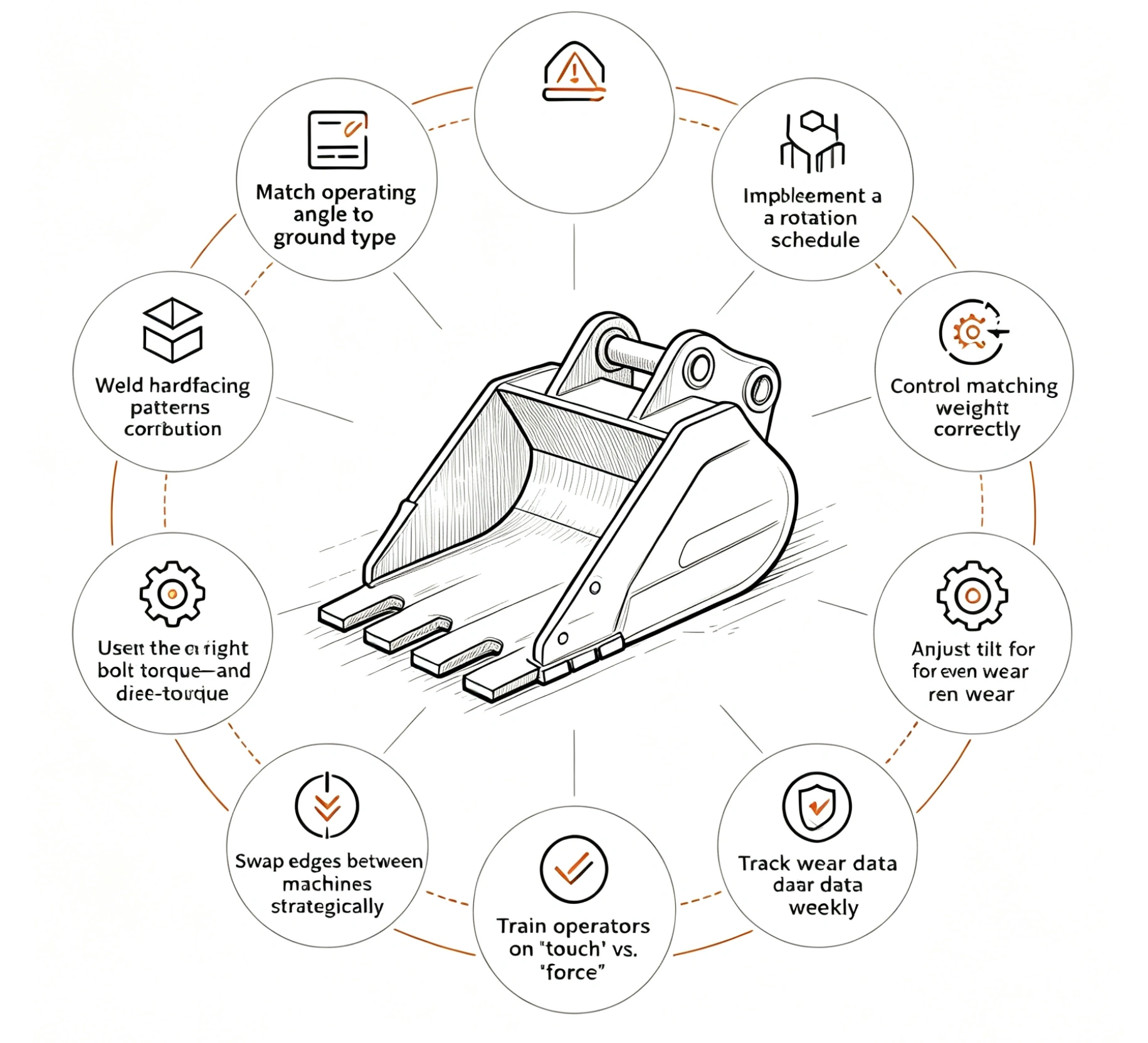
The nine strategies that deliver these results are:
Match operating angle to ground type
Implement a rotation schedule
Weld hardfacing patterns correctly
Control machine weight distribution
Adjust tilt for even wear
Use the right bolt torque—and re-torque
Swap edges between machines strategically
Track wear data weekly
Train operators on “touch” vs. “force”
None of these require expensive upgrades. They require discipline, data, and a basic understanding of how wear actually happens.
2. Why Blades Wear Out (The Physics You Need to Know)
Before you can reduce wear, you need to understand what causes it.
Three wear mechanisms affect every cutting edge:
| Wear Type | Cause | Visual Sign |
|---|---|---|
| Abrasive wear | Soil particles scraping against steel | Smooth, polished surface, gradual thinning |
| Impact wear | Rocks, boulders, and hard objects striking the edge | Chips, cracks, and fractured corners |
| Adhesive wear | Metal-to-metal contact (e.g., steel against rock) | Grooves, gouges, and material transfer |
The critical insight: Different ground conditions produce different wear mechanisms. The strategy that works in sand (abrasive wear) won’t work in quarry rock (impact wear). You need to match your strategy to your site.
Strategy #1: Match Operating Angle to Ground Type
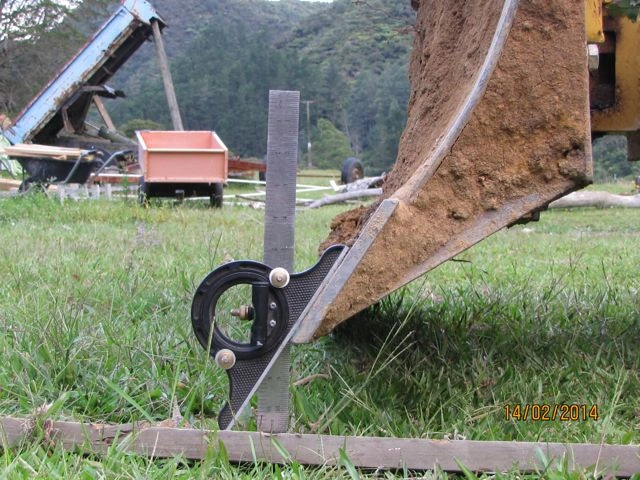
The angle at which your cutting edge meets the ground directly affects wear rate.
The Rule:
| Ground Type | Optimal Angle | Why |
|---|---|---|
| Soft soil, sand | 45°–50° | Steeper angle cuts better with less drag |
| Hard clay, compacted dirt | 40°–45° | Shallower angle spreads wear across more surface |
| Gravel, rocky ground | 35°–40° | Minimizes impact shock and edge chipping |
| Frozen ground | 30°–35° | Reduces point loading that causes fractures |
How to adjust: On graders, change the blade pitch via the circle turn mechanism. On dozers, adjust the tilt cylinder to alter the cutting angle. On loaders, change bucket position during the dig cycle.
4. Strategy #2: Implement a Rotation Schedule
Reversible cutting edges have two or four wear surfaces. Most operators run one surface until it’s completely gone—then flip.
That’s a mistake.
The Better Approach:
Rotate (flip) the edge when wear reaches 40–50% of original thickness
This gives you two evenly worn surfaces instead of one completely destroyed surface
Even wear means even load distribution—which reduces stress on the adapter
Rotation Schedule by Machine Type:
| Machine | Recommended Rotation Interval | Notes |
|---|---|---|
| Dozer (heavy push) | Every 80–120 operating hours | Check center wear—dozers wear fastest in the middle |
| Loader (bucket dig) | Every 100–150 hours | Loader edges wear more evenly than dozers |
| Grader (road work) | Every 60–100 hours | Graders wear fastest at the heel and toe |
Pro Tip: Mark each edge with a center punch (one dot for side A, two dots for side B). Track which side is in use on your maintenance log.
5. Strategy #3: Weld Hardfacing Patterns Correctly
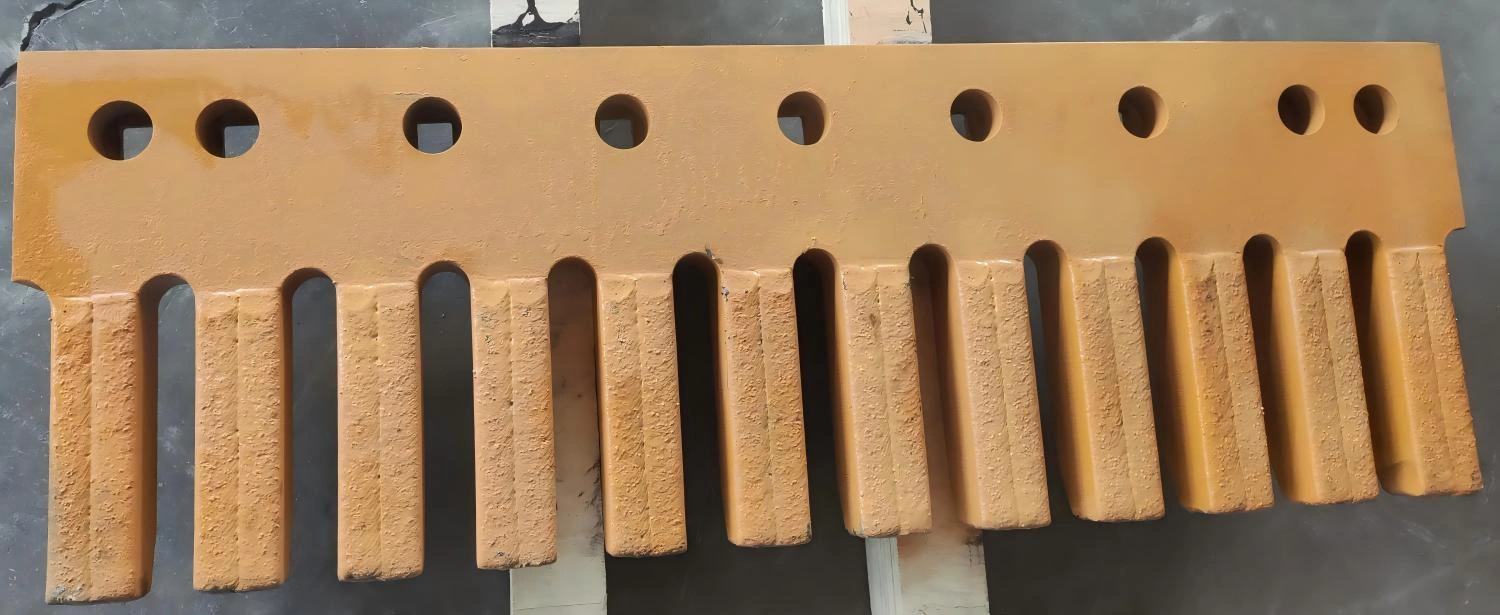
Hardfacing (applying wear-resistant weld material) can extend blade life by 2–3x—but only if applied correctly.
The Most Common Mistake: Applying a solid, continuous bead of hardfacing.
Why That’s Wrong: Solid beads create stress risers. When the edge impacts a rock, the hardfacing cracks at the edge of the bead—and the crack propagates into the base steel.
The Correct Approach:
| Pattern | Application | Effectiveness |
|---|---|---|
| Waffle/Checkerboard | Interrupted beads with gaps between them | ★★★★★ — Best for abrasive wear |
| Stripes parallel to cutting direction | Continuous beads running front-to-back | ★★★★☆ — Good for general use |
| Herringbone/V-shape | Angled beads that shed material sideways | ★★★★☆ — Best for graders |
| Solid continuous bead | Never use | ★☆☆☆☆ — Creates crack paths |
Hardfacing Best Practices:
Apply 3/8″ to 1/2″ bead width
Leave 1/2″ to 3/4″ gaps between beads (prevents stress cracking)
Keep hardfacing 1/4″ away from bolt holes (prevents bolt seizure)
Reapply when hardfacing wears down to the base steel level
Cost-Benefit: A $150 hardfacing job on a $500 edge that delivers 2.5x longer life saves you $750 in replacement costs over the life of that edge.
6. Strategy #4: Control Machine Weight Distribution
Your machine’s weight—and how it’s distributed—directly affects edge wear.
The Principle: Too much weight on the cutting edge increases ground pressure and accelerates wear. Too little weight reduces penetration and forces operators to make multiple passes.
For Dozers:
Check that the tilt cylinder isn’t forcing excessive down-pressure
Use the ripper or counterweight to balance front-to-rear weight distribution
In soft ground, reduce blade load to prevent “plowing” that wears the center
For Loaders:
Keep the bucket level during digging—don’t angle down excessively
Use automatic ride control (if equipped) to smooth out weight transfer
Avoid overloading the bucket—excess weight transfers directly to the cutting edge
For Graders:
Set the moldboard so the cutting edge carries 60–70% of the blade weight
The remaining 30–40% should be carried by the moldboard’s wear shoes or skids
Check rear axle weight distribution—too light on the rear reduces traction and forces more blade pressure
7. Strategy #5: Adjust Tilt for Even Wear
Uneven wear is a sign of improper tilt. And uneven wear means you’re replacing edges before the entire edge is fully used.
Diagnosing Uneven Wear:
| Wear Pattern | Likely Cause | Fix |
|---|---|---|
| Center worn more than ends | Blade is “crowned” or machine is underpowered | Reduce tilt angle, check machine alignment |
| One side worn more than other | Tilt cylinder biased to one side | Calibrate tilt cylinder, check for bent linkage |
| Heel and toe worn, center ok | Grader blade pitched too steeply | Reduce blade pitch angle |
| Ends worn, center ok | Grader blade pitched too shallowly | Increase blade pitch angle |
The Goal: Achieve wear that is within 10% of even across the entire cutting edge length. If the center is 30% more worn than the ends, you’re leaving usable edge material on the ends—and paying for it.
8. Strategy #6: Use the Right Bolt Torque—And Re-Torque
Cutting edge bolts are not “set and forget.”
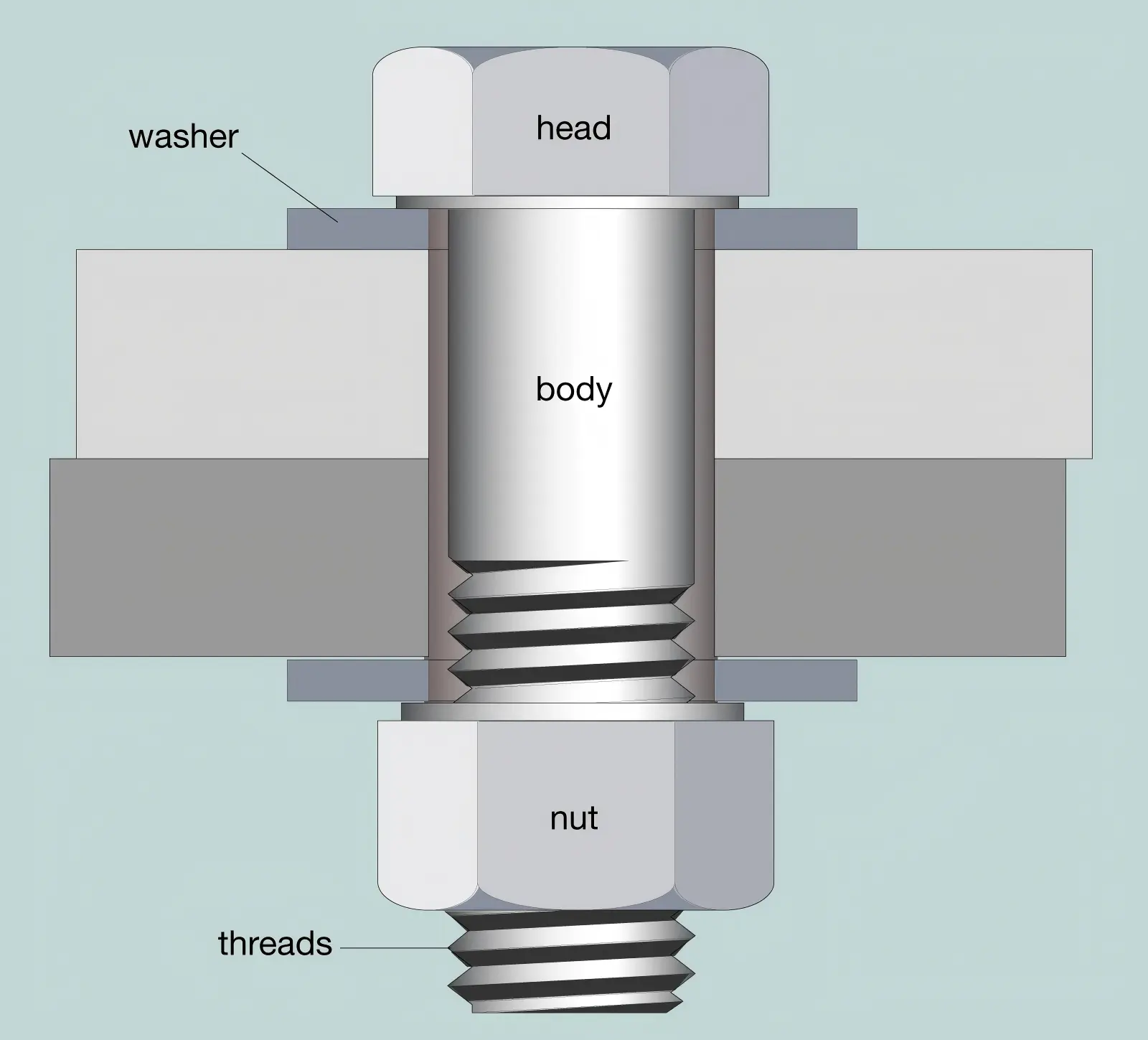
The Problem: Vibration and impact cause bolts to loosen. Loose bolts allow the edge to move—even microscopically. That movement wears the bolt holes oval, damages the adapter, and eventually causes bolt shear.
Correct Torque Specifications (General Reference):
| Bolt Size | Grade | Torque (ft-lbs) | Re-torque Interval |
|---|---|---|---|
| 5/8″ | Grade 8 | 180–220 | Every 40 hours |
| 3/4″ | Grade 8 | 320–380 | Every 40 hours |
| 7/8″ | Grade 8 | 500–580 | Every 40 hours |
| 1″ | Grade 8 | 750–850 | Every 40 hours |
Critical Rule: Always torque to the manufacturer’s specification, not a generic chart. Cat, Deere, Komatsu, and Volvo all have specific torque values for their adapters.
The 40-Hour Rule: Re-torque all cutting edge bolts after the first 40 hours of operation with a new edge—and every 40 hours thereafter. Mark the re-torque date on the edge with paint marker.
9. Strategy #7: Swap Edges Between Machines Strategically
If you have multiple machines of the same model, edge wear won’t be identical. One machine might work in abrasive ground; another in softer conditions.
The Strategy:
Run new edges on your most abrasive application first (the edge is at full thickness and can handle the worst conditions)
When that edge reaches 50% wear, move it to your least abrasive application
Run it there until fully worn
Why This Works: The thickest part of the edge’s life is consumed in the toughest conditions. The remaining life is “easy miles” in softer ground. Total combined lifespan across both machines increases compared to running separate edges on each machine.
10. Strategy #8: Track Wear Data Weekly
You can’t manage what you don’t measure.
The Minimum Data to Track:
Edge thickness at center (measured with a caliper or wear gauge)
Operating hours on the current edge
Ground conditions during that period (note any changes)
Date of last rotation or flip
Simple Tracking Method:
| Date | Machine | Edge Position | Center Thickness (in) | Hours Since New | Ground Type | Action Taken |
|---|---|---|---|---|---|---|
| 8/1 | D6 Dozer | Front | 0.85 | 120 | Gravel | None |
| 8/8 | D6 Dozer | Front | 0.72 | 160 | Gravel | Rotate edge |
| 8/15 | D6 Dozer | Front | 0.68 | 200 | Clay | Re-torqued |
What to Look For:
Accelerating wear (e.g., 0.10″ lost in 40 hours, then 0.20″ lost in the next 40) indicates a change in ground conditions or a mechanical issue
Sudden wear spikes often mean bolt loosening or edge movement
Consistent wear = your strategies are working
11. Strategy #9: Train Operators on "Touch" vs. "Force"
The single biggest variable in blade wear is the operator.
The Difference:
Touch operators feel the machine’s response, adjust angle and tilt dynamically, and let the blade do the work
Force operators push harder, crowd the blade, and use machine power to overcome poor technique
Force operators can cut blade life in half—on the same machine, in the same ground, with the same edge.
Simple Operator Training Points:
Let the blade find its own depth—don’t force it down
Reduce engine RPM once the blade is engaged (excess RPM doesn’t help—it just generates heat and wear)
Use the tilt control frequently—not just as a set-and-forget
Listen to the machine—when you hear metal-on-rock grinding, reduce pressure
Stop and check edge condition every shift—operators who inspect their own edges treat them better
Measurable Impact: A mining operation in Arizona tracked operator performance across 12 dozers. The top quartile of operators achieved 2.3x the blade life of the bottom quartile. The only variable was operating technique. Training closed that gap to 1.4x within six months.
12. The Complete Strategy Summary Table
| Strategy | Effort Level | Impact on Wear Life | Cost to Implement |
|---|---|---|---|
| Match angle to ground | Low | +20–30% | $0 |
| Rotation schedule | Low | +30–40% | $0 (labor only) |
| Hardfacing correctly | Medium | +100–150% | $150–300 per edge |
| Weight distribution | Medium | +15–25% | $0 |
| Tilt for even wear | Low | +20–35% | $0 |
| Proper torque + re-torque | Low | +25–40% | $0 (labor only) |
| Swap between machines | Medium | +15–20% | $0 |
| Track wear data | Low | +20–30% | $50 for caliper |
| Operator training | High | +30–100% | $500–1,000 per operator |
Combined Potential: Applying all nine strategies systematically can extend blade life by 2.5–3x compared to running edges with no wear management program.
13. The 30-Day Implementation Plan
Week 1: Measure and Document
Measure current edge thickness on all machines
Record hours since last replacement
Photograph wear patterns
Identify the machine with the shortest blade life—that’s your test case
Week 2: Adjust Angles and Torque
Set optimal pitch angles per ground type (Strategy #1)
Re-torque all bolts to spec (Strategy #6)
Mark all edges for rotation tracking (Strategy #2)
Week 3: Train Operators
Hold a 30-minute “touch vs. force” session on each shift
Demonstrate correct tilt adjustments
Show operators how to measure edge thickness themselves
Week 4: Start Data Tracking
Implement the weekly tracking sheet
Set rotation triggers at 40–50% wear
Schedule first hardfacing trial on one worn edge
14. FAQ
Q: How often should I hardface a cutting edge?
A: Once per edge life—apply hardfacing to a new edge before installation. Reapplying after wear has already started is less effective because the base steel has already been compromised.
Q: Can I use the same wear strategies on all three machine types?
A: Yes, but with adjustments. Dozers benefit most from angle and weight management. Graders benefit most from pitch and hardfacing. Loaders benefit most from bolt torque and rotation schedules. Tailor the emphasis to your fleet mix.
Q: What’s the biggest mistake operators make with cutting edges?
A: Running them too long. Once an edge is below 1/4″ thickness, it damages the adapter. That damage costs 5–10x more than the edge replacement itself.
Q: Does operating speed affect wear?
A: Significantly. Higher ground speed increases both impact energy and abrasive sliding distance. Reduce speed by 10–15% in abrasive ground and blade life improves by 20–25%.
15. Summary: The Bottom Line
Cutting edge wear is not a mystery. It’s physics, and physics responds to deliberate action.
| Core Principle | One-Sentence Takeaway |
|---|---|
| Angle matters | Match blade pitch to ground hardness |
| Rotation pays | Flip at 50% wear, not 100% |
| Hardfacing works | But only in the right pattern |
| Weight is wear | Balance your machine properly |
| Even wear = full use | Adjust tilt until wear is uniform |
| Bolts hold everything | Re-torque religiously |
| Operators are the variable | Train technique, not just hours |
| Data drives decisions | Measure wear, track hours, optimize |
| Swap strategically | First life in hard ground, second life in soft |
16. Next Steps
Pick one machine to pilot these strategies
Run the 30-day plan on that machine
Compare blade life before and after (use your tracked data)
Roll out the winning strategies across your entire fleet
Share results with operators—when they see the data, they buy in
Your cutting edges represent a significant annual expense. But they’re also one of the most controllable expenses in your equipment budget. These nine strategies don’t require capital investment. They require attention, consistency, and a commitment to managing wear instead of just accepting it. Start with one machine this week. The data will convince you to do the rest.